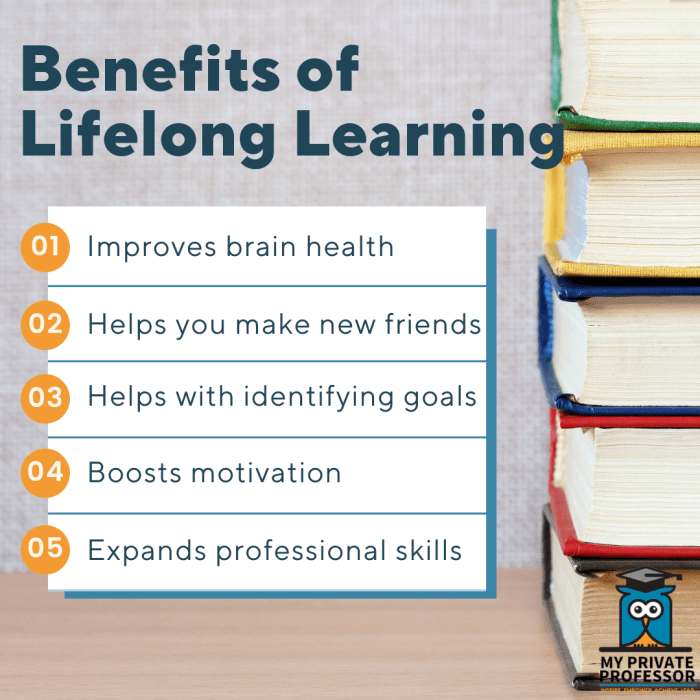
Lifelong learning programs are reshaping the landscape of education, making it more accessible and relevant than ever before. These initiatives encourage individuals of all ages to engage in continuous education, adapting to the ever-evolving demands of society and the job market. With a wide array of options available, from online courses to community workshops, lifelong learning programs foster personal growth and professional development, ensuring that learning never truly ends.
These programs span various disciplines and are offered by numerous organizations globally, catering to diverse interests and needs. Whether it’s enhancing skills in technology or exploring new scientific advancements, lifelong learning is crucial in fostering a culture of curiosity and adaptability.
Lifelong Learning Programs Overview
Lifelong learning programs are designed to facilitate continuous personal and professional development throughout an individual’s life. These programs emphasize the importance of being adaptable and resilient in a rapidly changing world, allowing learners to acquire new skills and knowledge at any age. By fostering a culture of learning, these programs contribute significantly to personal growth, career advancement, and social cohesion.The landscape of lifelong learning encompasses a wide variety of educational initiatives aimed at diverse audiences.
Different programs cater to various learning styles, interests, and professional needs, ensuring that all individuals have the opportunity to engage in education beyond traditional schooling. Many organizations globally recognize the value of lifelong learning and offer tailored programs that enhance learners’ capabilities and experiences.
Types of Lifelong Learning Programs
Several types of lifelong learning programs exist, each with distinct objectives and target audiences. These programs can often be categorized based on their format, content, or delivery methods. Below are some key types of lifelong learning programs available:
- Online Courses: Many institutions provide extensive online learning platforms, allowing individuals to enroll in courses ranging from coding to creative writing. Platforms like Coursera and edX offer courses from renowned universities, making quality education accessible worldwide.
- Workshops and Seminars: Local community centers and professional organizations frequently host workshops that focus on specific skills or knowledge areas, promoting hands-on learning and networking opportunities.
- Adult Education Programs: Many colleges and universities have dedicated adult education departments that provide programs tailored for adult learners, including degree completion, ESL courses, and vocational training.
- Mentorship Programs: These initiatives connect learners with industry professionals, providing guidance, support, and real-world insights, which are invaluable for personal and professional growth.
- Corporate Training Programs: Many companies recognize the need for ongoing employee development and offer in-house training sessions, workshops, and online resources to enhance workforce skills.
To illustrate the effectiveness of lifelong learning programs, several organizations stand out for their commitment to education. For example, the Open University in the UK offers a vast range of distance learning courses, making higher education accessible to anyone, regardless of their background. Similarly, the American Association of Community Colleges (AACC) provides resources and support for community colleges across the US to foster lifelong learning initiatives among their students and local populations.
“Education is not preparation for life; education is life itself.” – John Dewey
Integration of Lifelong Learning in Different Scientific Fields
Lifelong learning is essential across various scientific fields, enabling individuals to continuously develop their knowledge and skills in an ever-evolving landscape. This ongoing education not only fosters personal growth but also drives advancements within disciplines, promoting innovation and adaptability. As scientific fields become more interconnected, the integration of lifelong learning assumes an even more significant role in enhancing societal progress and addressing complex challenges.
Advancements in Social and Empirical Sciences
Lifelong learning programs significantly contribute to advancements in social and empirical sciences by ensuring practitioners remain updated with the latest theories, methodologies, and practices. This commitment to continuous improvement helps professionals adapt to changing societal needs and enhances the quality of their work. Key elements include:
- Staying informed about current research trends and data analysis techniques, which fosters accurate social assessments.
- Participating in interdisciplinary collaborations that enrich understanding and solutions to social issues.
- Engaging in workshops and conferences that focus on emerging topics like behavioral science and public policy.
“Continuous learning empowers social scientists to effectively respond to dynamic societal changes.”
Role in Natural and Physical Science Sectors
In the natural and physical sciences, lifelong learning is crucial for maintaining relevance and driving innovation. It encourages scientists to embrace new technologies, methodologies, and discoveries, thereby enhancing research outcomes and application. Essential aspects include:
- Adoption of advanced laboratory techniques and instrumentation that improve research quality and reliability.
- Integration of computational tools and data analytics in research, allowing for more precise and efficient exploration of scientific questions.
- Collaboration with industries to apply scientific research in practical settings, which leads to technological advancements and societal benefits.
“Ongoing education in the natural sciences paves the way for groundbreaking discoveries and applications.”
Importance for Professionals in Computer Science Education
In computer science education, lifelong learning is paramount as technology evolves at an unprecedented pace. Educators and professionals in this field must continually enhance their skills to provide relevant and effective teaching. Important factors include:
- Engagement in professional development courses that cover emerging programming languages, software development methodologies, and cybersecurity protocols.
- Participation in tech conferences and webinars, which provide insights into industry trends and networking opportunities.
- Collaboration with tech firms to incorporate real-world applications into educational curricula, preparing students for current job markets.
“Lifelong learning equips computer science educators to prepare students for future challenges and opportunities.”
Challenges and Innovations in Lifelong Learning

Lifelong learning programs are essential for personal and professional growth, yet they often encounter several challenges. Individuals and institutions striving to implement these programs face hurdles that can hinder progress and participation. Understanding these challenges is crucial to developing effective strategies for innovation in lifelong learning.A prominent challenge is the lack of awareness and motivation among individuals about the importance of continuous education.
Many people may not recognize the benefits of lifelong learning or feel overwhelmed by their existing commitments. Additionally, institutions often struggle with limited resources, including funding, technology, and trained personnel, which can hinder the development and delivery of effective programs. Moreover, there may be a disconnect between traditional educational frameworks and the needs of adult learners, who seek flexible and relevant options.
Common Challenges in Implementing Lifelong Learning Programs
Several common obstacles affect both individuals and educational institutions in their pursuit of lifelong learning:
- Awareness and Engagement: Many potential learners are unaware of the lifelong learning opportunities available to them or lack the motivation to pursue additional education.
- Accessibility: Barriers such as geographical location, financial constraints, and time limitations can make it difficult for individuals to participate in learning programs.
- Resource Limitations: Institutions may face budgetary constraints, limiting their ability to develop and support lifelong learning initiatives effectively.
- Integration with Existing Systems: Aligning lifelong learning programs with current educational structures can be challenging, resulting in a misalignment of goals and methodologies.
Innovative Methods Enhancing Lifelong Learning Experiences
To overcome the challenges faced in lifelong learning, institutions and educators are implementing innovative strategies that enhance the learning experience:
- Online Learning Platforms: The rise of digital platforms allows for flexible, self-paced learning, making it easier for individuals to access learning materials anytime, anywhere.
- Gamification: Incorporating game elements into learning experiences can increase engagement and motivation, encouraging learners to participate actively.
- Microlearning: Short, focused learning modules or “nuggets” enable busy individuals to acquire knowledge quickly and effectively, fitting seamlessly into their schedules.
- Personalized Learning Paths: Tailoring educational experiences to meet the unique needs and interests of learners can enhance relevance and effectiveness.
Alternative Science Programs Promoting Lifelong Learning
Various alternative science programs are emerging to promote lifelong learning, each adopting unique approaches to engage learners:
- Citizen Science Projects: These initiatives invite non-professionals to contribute to scientific research, fostering community engagement and a sense of ownership in the learning process.
- Open Courseware Platforms: Platforms like MIT OpenCourseWare provide free access to course materials, allowing learners from all backgrounds to engage with high-quality educational resources.
- Science Café Events: Informal gatherings where scientists discuss their work with the public create an interactive environment for learning and discussion, making science more accessible.
- STEM Workshops for Adults: Programs focused on hands-on learning in science, technology, engineering, and mathematics help adults develop practical skills and knowledge relevant to today’s job market.
Final Thoughts
In conclusion, lifelong learning programs play a pivotal role in not only advancing individual careers but also in driving progress across various fields of science and technology. By embracing the challenges and innovations within these programs, we can enhance our collective knowledge and skills, paving the way for a brighter, more informed future. As curiosity continues to be a key driver in our ever-changing world, lifelong learning will remain essential in keeping us engaged and evolving.
Question & Answer Hub
What are lifelong learning programs?
Lifelong learning programs are educational initiatives designed to encourage continuous learning and skill development throughout an individual’s life.
Who can participate in lifelong learning programs?
Anyone can participate, regardless of age or background, as these programs are designed to cater to a wide range of interests and needs.
How do lifelong learning programs benefit professionals?
They help professionals stay updated with industry trends, improve their skills, and enhance their employability, leading to career growth.
What challenges do institutions face in implementing these programs?
Common challenges include funding, engagement of participants, and adapting to the diverse needs of learners.
Are there online lifelong learning options available?
Yes, many lifelong learning programs are offered online, allowing participants to learn at their own pace and from anywhere.


