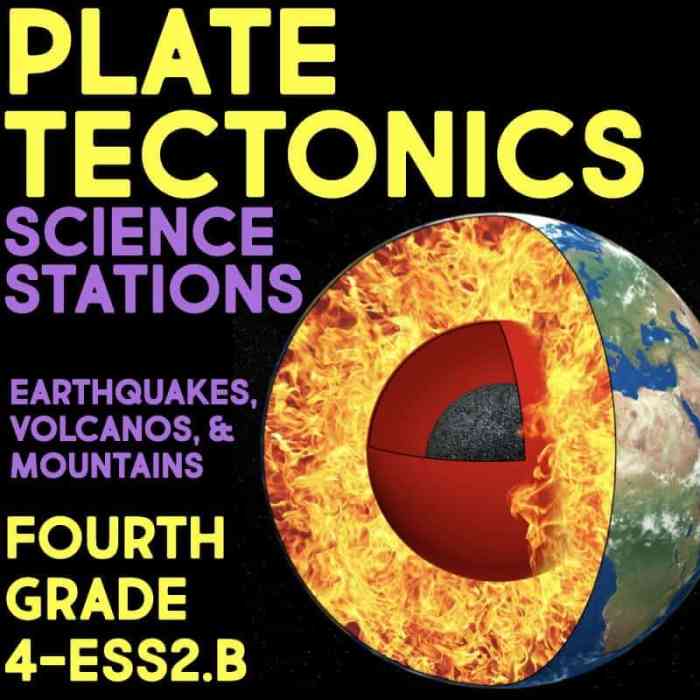
Delving into Plate tectonics and earthquakes, we explore the dynamic forces that shape our planet and lead to some of nature’s most powerful events. Understanding the intricate dance of tectonic plates not only enlightens us about geological processes but also reveals critical insights into the occurrence of earthquakes, their magnitude, and their effects on human civilization.
This exploration begins with the fundamentals of plate tectonics, where we uncover the significance of tectonic plate boundaries, the mechanisms driving their movements, and the vital role of convection currents in the Earth’s mantle. From there, we transition to the fascinating relationship between these tectonic activities and the earthquakes they generate, illustrating how specific events are interlinked and the data that underscores their frequency and intensity.
The Basics of Plate Tectonics
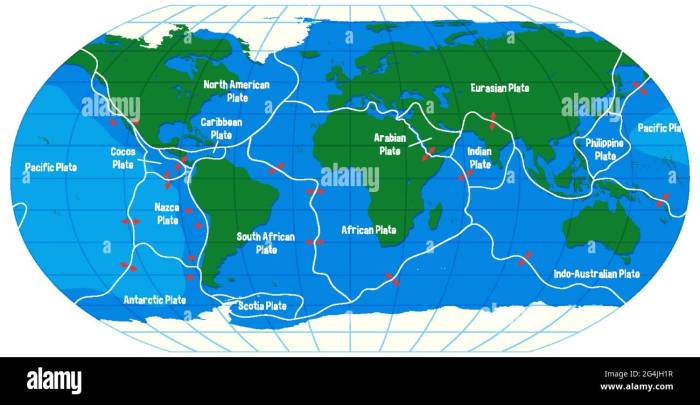
The theory of plate tectonics is a fundamental concept in geology that explains the dynamic nature of the Earth’s surface. This theory posits that the Earth’s lithosphere is divided into several tectonic plates that float on the semi-fluid asthenosphere beneath. The movements and interactions of these plates are responsible for many geological phenomena, including the formation of mountains, earthquakes, and volcanic activity.
Understanding plate tectonics is essential for interpreting the geological history of our planet and predicting future geological events.The tectonic plates are in constant motion, driven by forces generated within the Earth. The significance of this theory lies not only in its power regarding past geological events but also in its utility for assessing natural hazards and understanding Earth’s ongoing processes.
The interactions between plates can be categorized into three main types of boundaries: divergent, convergent, and transform.
Tectonic Plate Boundaries
The characteristics of the different types of tectonic plate boundaries are crucial for understanding the nature of geological activity. Each boundary type exhibits distinct features and behaviors that result in various geological processes.
Divergent Boundaries
At divergent boundaries, tectonic plates move away from each other. This movement creates new crust as magma rises to the Earth’s surface. An example of a divergent boundary is the Mid-Atlantic Ridge, where the North American and Eurasian plates are separating, leading to the formation of new oceanic crust.
Convergent Boundaries
In contrast, convergent boundaries occur when two plates collide. This can result in one plate being forced beneath another in a process known as subduction. This interaction often leads to the creation of mountain ranges and volcanic arcs, such as the Himalayas, formed by the collision of the Indian and Eurasian plates.
Transform Boundaries
Transform boundaries involve plates sliding past each other horizontally. This lateral movement can cause significant stress that results in earthquakes. A well-known example is the San Andreas Fault in California, where the Pacific Plate and the North American Plate interact.The understanding of plate boundaries is crucial for predicting earthquake activity and volcanic eruptions, which can have devastating impacts on human populations and infrastructure.
Convection Currents in the Mantle
Convection currents within the Earth’s mantle play a pivotal role in driving the movement of tectonic plates. These currents are caused by the heat from the Earth’s core, which creates a cycle of rising hot material and sinking cooler material.
Heat Transfer
The core’s heat causes the mantle’s rock to heat up, becoming less dense and rising towards the surface. As it cools, it becomes denser and sinks back down. This continuous cycle creates currents that effectively act like a conveyor belt, facilitating the movement of tectonic plates above.
Impact on Plate Movement
The movement of these convection currents influences the speed and direction of plate motions. For instance, faster-moving currents can lead to rapid shifts in plate positions, resulting in increased seismic activity. This dynamic process is essential for understanding how plate tectonics operates on a global scale, impacting everything from continental drift to the formation of geographical features.
“The movement of tectonic plates is driven by the heat from the Earth’s core, creating convection currents in the mantle.”
The study of plate tectonics and the underlying mantle dynamics not only enhances our comprehension of Earth’s geological history but also equips us with the knowledge to mitigate the risks associated with natural disasters.
Earthquakes and Their Relationship to Plate Tectonics
Earthquakes are a dramatic and powerful manifestation of the dynamic processes occurring at the boundaries of tectonic plates. These geological phenomena are not only fascinating but also crucial to understanding the Earth’s structure and behavior. By examining how earthquakes form in relation to plate tectonics, we can develop a clearer picture of their impact on our planet.The process of earthquakes occurs primarily due to the movement of tectonic plates, which are massive slabs of Earth’s lithosphere that float on the semi-fluid asthenosphere beneath them.
As these plates interact—either colliding, pulling apart, or sliding past one another—stress builds up at their boundaries. Eventually, this stress exceeds the strength of the rocks, leading to a sudden release of energy. This release generates seismic waves, which we perceive as earthquakes. The point of origin, known as the focus, is where the earthquake begins, while the point directly above it on the surface is called the epicenter.
Major Earthquakes and Tectonic Events
Several historic earthquakes illustrate the potent relationship between tectonic activity and seismic events. Understanding these connections can shed light on the cycles of geological activity.
- 1906 San Francisco Earthquake: This devastating earthquake, measuring 7.9 on the moment magnitude scale, was caused by the movement of the San Andreas Fault, a boundary between the Pacific Plate and the North American Plate. The rupture along this transform boundary resulted in widespread destruction and fires across the city.
- 2010 Haiti Earthquake: Occurring on January 12, this magnitude 7.0 earthquake struck near the boundary of the Caribbean and North American Plates. The shallow focus of the earthquake resulted in catastrophic damage to infrastructure and a significant loss of life.
- 2004 Indian Ocean Earthquake and Tsunami: On December 26, a massive undersea earthquake measuring 9.1-9.3 struck off the coast of Sumatra, Indonesia, along a subduction zone where the Indian Plate is being forced beneath the Burma Plate. This powerful quake triggered a tsunami that affected several countries and resulted in significant casualties and devastation.
Earthquake Magnitudes and Frequencies Related to Tectonic Activity
The relationship between tectonic activity and earthquake magnitudes is well-documented. Earthquakes are categorized based on their magnitude, providing insight into their potential impact. The following table Artikels the magnitude scale and its corresponding effects:
| Magnitude | Description | Potential Impact |
|---|---|---|
| 1.0 – 2.9 | Micro | Generally not felt, but recorded by seismographs. |
| 3.0 – 3.9 | Minor | Often felt, but rarely causes damage. |
| 4.0 – 4.9 | Light | Noticeable shaking of indoor objects, but significant damage is unlikely. |
| 5.0 – 5.9 | Moderate | Can cause damage to poorly constructed buildings. |
| 6.0 – 6.9 | Strong | Can be destructive in populated areas. |
| 7.0 – 7.9 | Major | Can cause widespread and severe damage. |
| 8.0 and higher | Great | Can cause catastrophic damage in populated areas. |
The frequency of earthquakes is closely tied to tectonic plate movement. Regions near active plate boundaries—such as the Ring of Fire—experience a higher incidence of earthquakes compared to stable continental interiors. Studies indicate that thousands of earthquakes occur every day, most of which are too small to be felt. However, understanding these patterns helps scientists assess risk and improve preparedness for future seismic events.
Interdisciplinary Connections to Other Sciences
The study of plate tectonics extends far beyond the realm of geology, influencing various scientific disciplines and enhancing our understanding of complex natural phenomena. By exploring the connections between plate tectonics and other sciences, we can appreciate how these fundamental processes shape our world and inform future advancements in multiple fields.
Influence of Plate Tectonics in Natural and Physical Sciences
Plate tectonics plays a crucial role in numerous natural and physical sciences. Its influence can be observed in geological phenomena such as volcanic activity, mountain formation, and the creation of ocean basins. Understanding these processes is essential for predicting natural disasters and managing environmental resources effectively. For instance, the movement of tectonic plates can lead to earthquakes and volcanic eruptions, which have significant implications for both ecosystems and human societies.
By studying tectonic activity, scientists can develop models to forecast potential disasters, enabling better preparedness and mitigation strategies.
Comparison Between Plate Tectonics and Social Sciences
The relationship between plate tectonics and social sciences is particularly evident in the field of disaster preparedness and community response. Both disciplines aim to understand how systems operate under stress and the impact of external forces on communities.Effective disaster preparedness requires an understanding of geological risks which can be informed by the principles of plate tectonics. For example, regions located near tectonic boundaries are more susceptible to earthquakes and tsunamis.
Social scientists study human behavior, community structures, and response strategies in such regions, emphasizing the importance of education and resource allocation for effective crisis management.
- Risk Assessment: Evaluating geologic hazards using data from tectonic activity informs communities about potential threats and helps in developing response plans.
- Community Resilience: Understanding how communities respond to seismic events can guide the creation of support systems and recovery plans, enhancing overall resilience.
- Public Awareness and Education: Education initiatives that explain the basics of plate tectonics can empower communities to prepare for and respond to natural disasters more effectively.
Contribution of Computer Science Education to Modeling Tectonic Movements
Computer science education significantly contributes to modeling tectonic movements and predicting earthquakes. With advancements in technology, scientists can utilize computational models to simulate the dynamics of tectonic plate interactions.These models help visualize complex geological processes and predict the likelihood of seismic events. By incorporating large datasets from geological surveys and seismic activity records, computer algorithms can enhance the accuracy of earthquake forecasts.For instance, machine learning techniques can identify patterns in seismic data that may indicate an impending earthquake, allowing for timely alerts and potentially saving lives.
This intersection of computer science and geology not only advances our understanding of plate tectonics but also plays a vital role in developing real-time monitoring systems for disaster management.
The integration of computer science into geosciences provides innovative solutions for predicting and mitigating the impacts of tectonic-related disasters.
Final Review
In summary, the relationship between plate tectonics and earthquakes is a captivating subject that highlights the underlying geological forces shaping our world. By understanding these concepts, we enhance our awareness of natural disasters, improve preparedness, and foster resilience in communities. As we continue to uncover the secrets of our planet’s movements, we are reminded of the delicate balance between nature’s beauty and its potential for destruction.
Quick FAQs
What are tectonic plates?
Tectonic plates are large sections of the Earth’s lithosphere that move and interact with each other, causing geological activity like earthquakes and volcanic eruptions.
How are earthquakes measured?
Earthquakes are measured using seismographs, which record the seismic waves generated by the movement of tectonic plates.
Can earthquakes be predicted?
While scientists can identify high-risk areas and assess the likelihood of future earthquakes, precise prediction remains a challenge.
What should I do during an earthquake?
During an earthquake, drop to the ground, take cover under sturdy furniture, and hold on until the shaking stops.
How do plate tectonics affect climate?
Plate tectonics can influence climate by affecting ocean currents, mountain formation, and volcanic activity, which can all have long-term impacts on weather patterns.


