
The Multiverse hypothesis invites us into an intriguing realm where countless realities coexist, pushing the boundaries of our understanding of the universe. This concept has captured the imaginations of scientists and philosophers alike, as it explores the implications of multiple universes arising from quantum mechanics and cosmological theories.
By examining the contributions of notable figures in this field, such as physicists and cosmologists, we can see how the multiverse hypothesis not only reshapes theoretical physics but also influences social sciences, education, and beyond. It raises profound questions about existence and reality, prompting further inquiry into the nature of our universe.
Understanding the Multiverse Hypothesis
The multiverse hypothesis presents a fascinating and complex framework for understanding the nature of reality, suggesting that our universe is just one of many. This theory has profound implications for theoretical physics, allowing scientists to explore questions about the origins of our cosmos and the fundamental laws that govern it. The significance of the multiverse hypothesis lies in its potential to unify various theories in physics, offering a broader perspective on existence.At its core, the multiverse hypothesis posits that there are multiple, possibly infinite, universes that coexist alongside our own.
These universes may have different physical laws, constants, and even dimensions. The hypothesis arises from several branches of modern physics, notably cosmology and quantum mechanics. In cosmology, the inflationary model suggests that rapid expansion after the Big Bang could lead to countless bubble universes. In quantum mechanics, the many-worlds interpretation proposes that every quantum event creates a branching of realities, leading to a spectrum of alternate outcomes.
Interpretations of the Multiverse
Various interpretations of the multiverse hypothesis stem from significant theories in physics and highlight diverse mechanisms by which multiple universes could emerge. Each interpretation offers unique insights into the nature of reality, often challenging our perceptions of time, space, and existence.The primary interpretations include:
- Cosmic Inflation: The concept of inflationary cosmology, proposed by Alan Guth, suggests that the rapid expansion of space can create “pocket” or “bubble” universes. Each bubble could possess distinct physical properties.
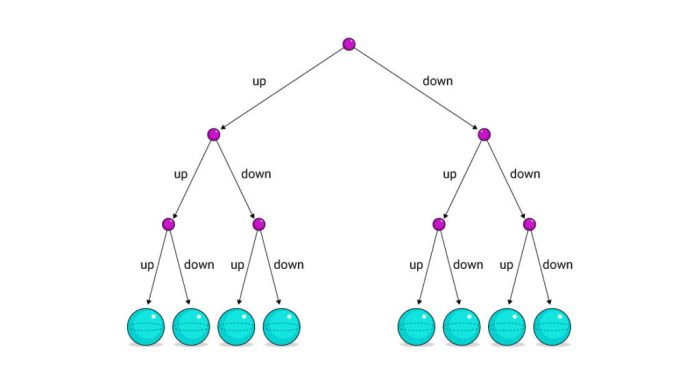
- Many-Worlds Interpretation: Introduced by Hugh Everett III, this interpretation of quantum mechanics indicates that all possible outcomes of quantum events occur in separate, branching universes, leading to an infinite number of realities.
- String Theory Landscape: In string theory, a vast landscape of different vacuum states can yield various physical constants and laws, resulting in multiple universes that could potentially host different forms of matter and energy.
- Anthropic Principle: This principle suggests that the universe’s physical laws are fine-tuned for life, positing that numerous universes exist, and we happen to inhabit one that supports our existence.
Prominent figures have significantly contributed to the development of multiverse theories, enhancing our understanding of complex ideas:
- Alan Guth: As the pioneer of inflationary theory, Guth’s work laid the groundwork for the idea that different regions of space could evolve into separate universes.
- Hugh Everett III: His many-worlds interpretation revolutionized the field of quantum mechanics, providing a framework for considering parallel realities.
- Leonard Susskind: A key figure in string theory, Susskind has elaborated on the landscape of vacua, further elucidating how multiple dimensions can lead to diverse universes.
- Max Tegmark: Tegmark has categorized the multiverse into four levels, each representing increasing complexity and divergence from our observable universe.
“Every time a quantum event occurs, all possible outcomes happen in separate branches of the universe.”
Hugh Everett III
Understanding the multiverse hypothesis not only expands our grasp of theoretical physics but also invites profound philosophical questions about the nature of existence, identity, and the universe itself.
Implications for Social and Empirical Sciences
The multiverse hypothesis, while predominantly a topic of interest in physics and cosmology, extends its influence into the realms of social and empirical sciences. This hypothesis suggests that there are potentially infinite universes with varying physical laws and constants, which can profoundly impact the ways we understand human behavior, culture, and societal structures. Engaging with this idea challenges traditional frameworks in social sciences, prompting a re-evaluation of how we interpret empirical data and human experiences.
Influence on Philosophical Debates
The notion of a multiverse introduces complex philosophical questions that resonate within social sciences. It invites scholars to reconsider the nature of reality and existence, particularly concerning human agency and morality. For instance, if multiple universes exist where different choices lead to different outcomes, the implications for ethical decision-making and free will become considerably intricate. This could lead to debates on the validity of individual choices and the concept of responsibility, as it raises the question of whether outcomes are a product of singular decisions or a multitude of possibilities.
Applications in Psychology
In psychology, the multiverse hypothesis can be utilized as a conceptual framework for understanding the complexities of human behavior. For example, the idea that individuals experience alternate realities could influence therapeutic practices. By recognizing that a client might perceive their situation through various lenses, therapists can better tailor interventions to address not just the current reality but also explore alternate scenarios and outcomes that clients might envision.
This approach aligns with narrative therapy, where individuals are encouraged to re-author their life stories, reflecting on different possible paths they could take.
Applications in Sociology
Sociology can also benefit from the multiverse concept by examining cultural phenomena as products of multiple possible social configurations. For instance, understanding social movements through the lens of the multiverse allows sociologists to consider how different societal structures and norms could yield divergent outcomes. This perspective can enhance the analysis of why certain social changes occur in some cultures but not in others, suggesting that the diversity of contextual factors across various “universes” leads to unique societal dynamics.
Impact on Empirical Research Methodologies
The presence of the multiverse hypothesis necessitates a reevaluation of empirical research methodologies. Traditional models may often assume a singular outcome based on collected data, but acknowledging the existence of multiple universes encourages researchers to consider a broader range of variables and potential outcomes. This shift can lead to the development of more robust statistical models that account for variability across different contexts and conditions.
For instance, when conducting longitudinal studies, researchers could incorporate multiverse-inspired frameworks to explore how various life choices and external factors might have led to different life paths for individuals within the same cohort.
“The multiverse challenges us to think beyond singular narratives, embracing the complexities and diversities inherent in human experiences.”
Through these discussions, it becomes evident that the multiverse hypothesis not only enriches theoretical perspectives in social and empirical sciences but also encourages a more nuanced understanding of human behavior and societal interactions.
Multiverse in Education and Computer Science
The concept of the multiverse has been a fascinating subject in theoretical physics and cosmology, but its implications extend far beyond these fields. In education, particularly within computer science, the multiverse hypothesis can serve as a unique platform for engaging students in complex topics. By integrating multiverse concepts into computer science curricula, educators can foster critical thinking, creativity, and a deeper understanding of both scientific principles and computational theories.Innovative teaching methods can significantly enhance student engagement with the multiverse hypothesis, particularly in science subjects.
These methods can help bridge the gap between theoretical knowledge and practical application, making abstract concepts more tangible for learners. Below are some effective strategies for incorporating the multiverse hypothesis into educational settings.
Curriculum for a Course Integrating Multiverse Concepts with Computer Science Education
Creating a curriculum that effectively combines multiverse theories with computer science can help students explore the vast possibilities within both fields. This curriculum could consist of modules that cover the fundamental principles of the multiverse along with relevant programming concepts.
- Module 1: Introduction to the Multiverse
This module would cover the basics of the multiverse hypothesis, discussing various theories such as the many-worlds interpretation of quantum mechanics and string theory. Students would explore the philosophical implications and how these theories are represented in computational models.
- Module 2: Computer Simulations of Parallel Universes
In this module, students would learn to use programming languages like Python or Java to create simulations that represent different multiverse scenarios. This could involve coding environments to visualize how different quantum events might lead to alternative realities.
- Module 3: Data Analysis of Multiverse Models
This module would focus on data analysis techniques relevant to the multiverse, teaching students how to interpret and analyze simulation data to draw conclusions about various universes and their characteristics.
- Module 4: Ethical Considerations in Multiverse Theories
Students would engage in discussions about the ethical implications of the multiverse hypothesis, including its philosophical ramifications and how it affects our understanding of reality and existence.
Innovative Teaching Methods for Engaging Students
Engaging students with complex scientific concepts requires creativity and flexibility in teaching methods. Here are some innovative approaches to facilitate learning about the multiverse hypothesis in science education:
- Interactive Workshops
Workshops can provide hands-on experience with theories and simulations, allowing students to collaboratively create and experiment with multiverse concepts.
- Gamification
Incorporating game design principles can make learning about the multiverse more engaging. Students could create games that simulate different multiverse scenarios, requiring them to apply their understanding of computer science and scientific principles.
- Collaborative Projects
Group projects can encourage teamwork and peer learning. For instance, students could work in teams to create presentations or videos that explain various multiverse theories or demonstrate their simulations.
- Use of Multimedia Resources
Integrating videos, podcasts, and interactive online forums can provide diverse perspectives and enhance understanding of complex topics related to the multiverse.
Project Design for Programming Simulations of Different Multiverse Scenarios
Implementing a project that involves programming simulations can greatly enhance student understanding of the multiverse hypothesis. The design of such a project might include the following components:
- Project Title: “Exploring the Infinite: Multiverse Simulations”
Students will create interactive simulations of specific multiverse scenarios, such as the many-worlds interpretation where every choice leads to a branching universe.
- Objectives:
The project aims to teach students programming skills while allowing them to visualize complex scientific theories and concepts. Students will gain hands-on experience with coding and data analysis.
- Development Phases:
- Phase 1: Research
Students research various multiverse theories and select one to simulate.
- Phase 2: Design
Students Artikel their simulation’s objectives and user interface, focusing on how to visually represent their chosen scenario.
- Phase 3: Implementation
Using programming languages, students develop their simulations, incorporating user input and visual elements to explore outcomes.
- Phase 4: Presentation
Students present their simulations to the class, explaining the science behind their work and the implications of their findings.
- Phase 1: Research
Summary
In summary, the Multiverse hypothesis challenges our traditional perceptions of reality and encourages interdisciplinary exploration across various fields. As we delve deeper into this captivating theory, we uncover new perspectives that can enhance both scientific inquiry and societal understanding, making the multiverse a significant topic for contemplation and study.
FAQ Section
What is the Multiverse hypothesis?
The Multiverse hypothesis suggests that there are multiple, possibly infinite, universes that exist parallel to our own, each with different outcomes and realities.
How does the Multiverse hypothesis relate to quantum mechanics?
In quantum mechanics, the multiverse concept is often linked to the Many-Worlds Interpretation, which posits that all possible outcomes of quantum events actually occur in separate, branching universes.
Who are some key figures in the development of the Multiverse hypothesis?
Notable figures include physicists like Hugh Everett III, who proposed the Many-Worlds Interpretation, and cosmologists like Alan Guth and Andrei Linde, who contributed to theories of cosmic inflation.
What are the philosophical implications of the Multiverse hypothesis?
The multiverse raises questions about determinism, free will, and the nature of reality, prompting debates in philosophy regarding the existence of alternate possibilities and moral implications.
Can the Multiverse hypothesis be tested empirically?
Currently, the multiverse remains largely theoretical, and direct empirical testing poses significant challenges, although some scientists propose indirect methods to gather evidence.


